
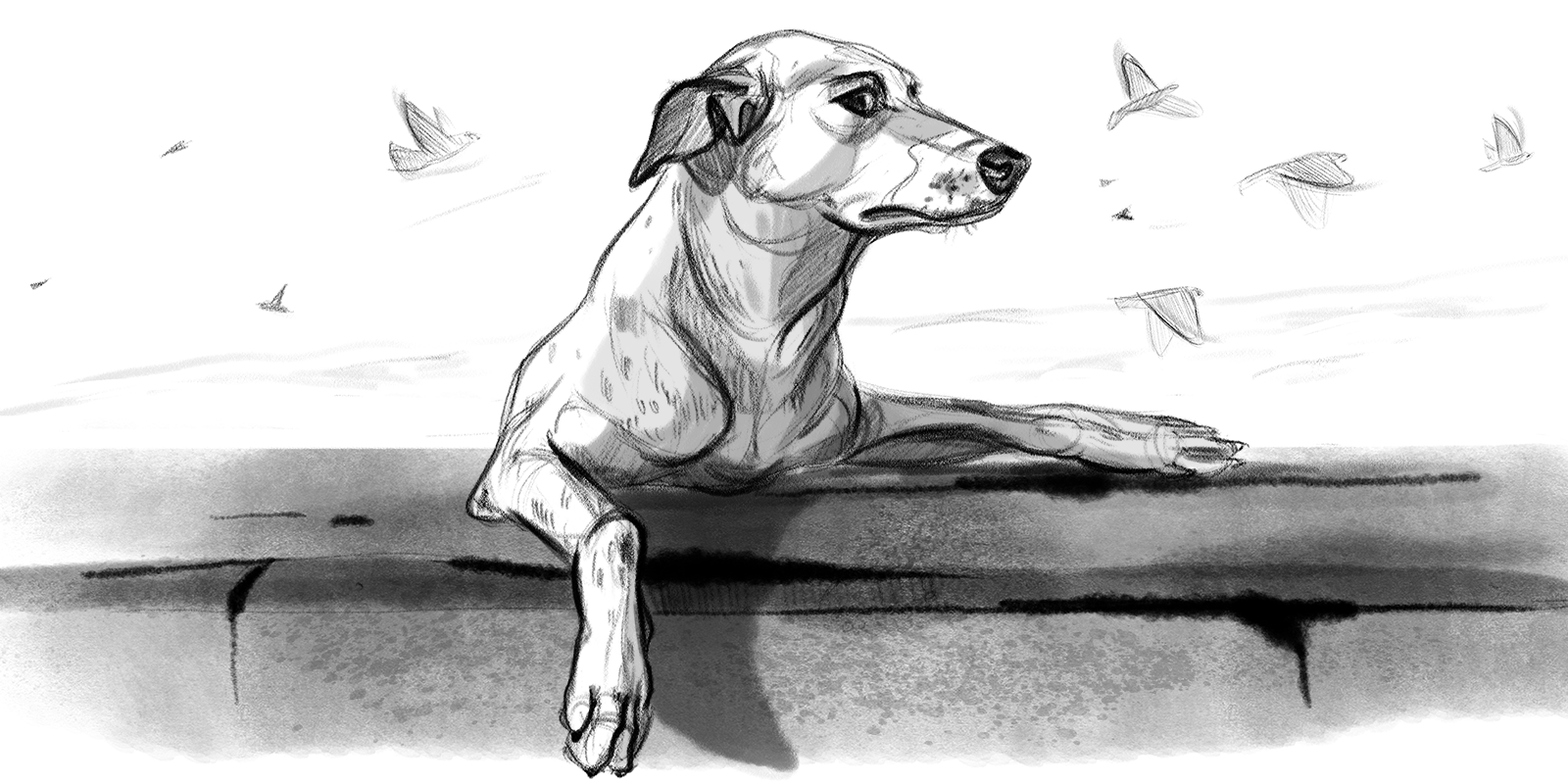
gând vagabond...
A research project written and produced by Aron Nor, with illustrations by Mina Mimosa.
In collaboration with Aron Nor, I created a series of editorial illustrations for his research on the “stray dog problem.”
Drawn with digital brushes that mimic charcoal and watercolor, the illustrations depict dogs living freely in public spaces across Romania.

The illustrations are inspired by documentary photographs and a solarpunk aesthetic, and draw on the philosophies and concepts explored, in an attempt to present alternative visions of the present—ones in which dogs’ agency is acknowledged.

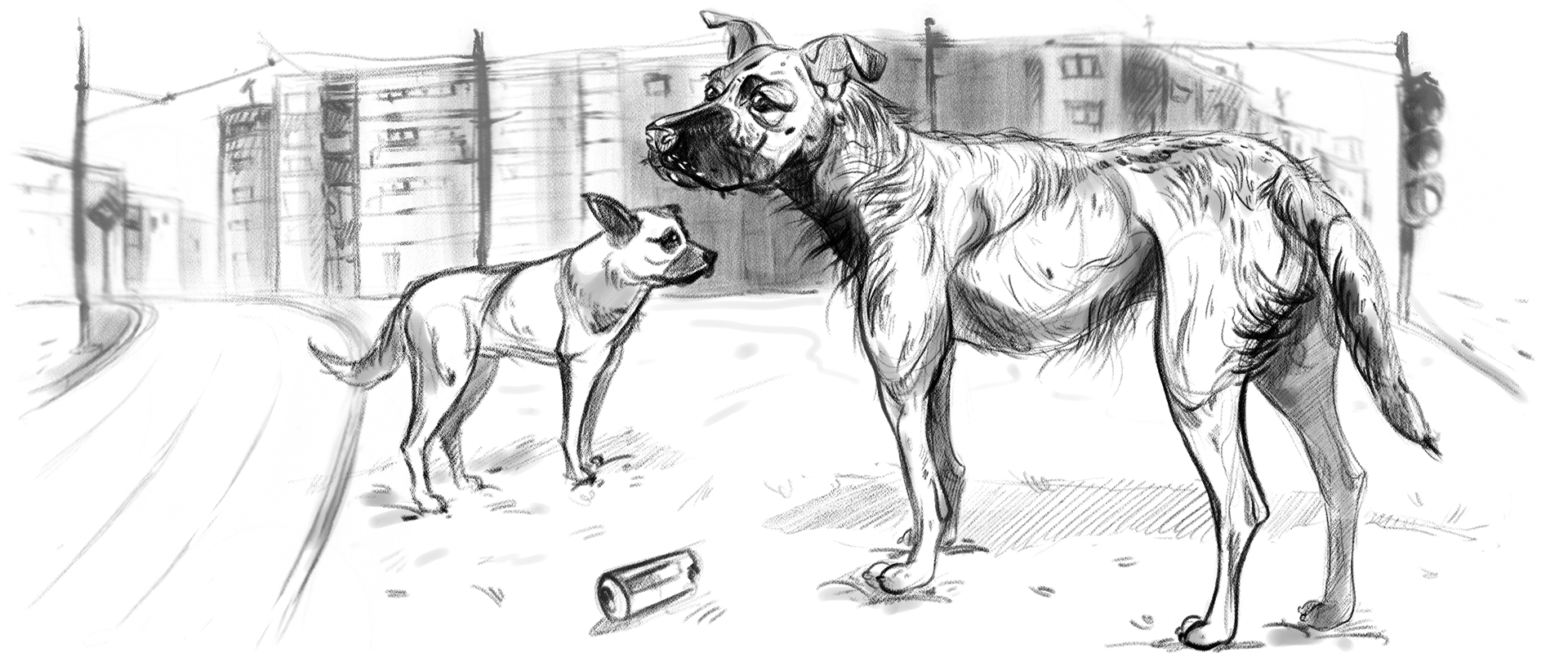
I. People’s Alleys, Dogs’ Homes
- An introduction
"Aiming to examine the so-called 'stray dog problem' in Romania and the biopolitical practices associated with it, this research simultaneously questions who owns public space and what kinds of barriers and forms of violence (institutional, intersubjective, or epistemic) traverse this space, in order to explore other modes of coexistence and resistance from a perspective focused both on diminishing power relations and on expanding the agency and freedom of non-humans."
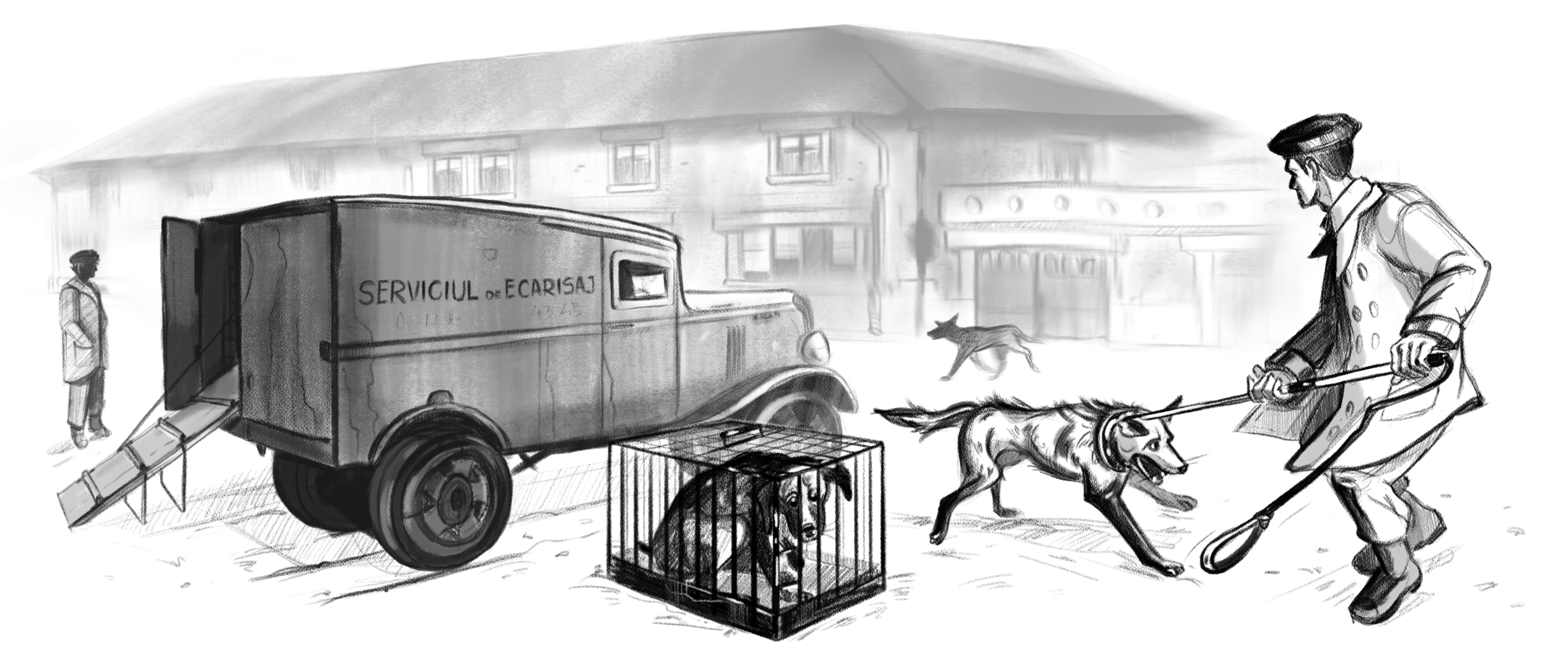
II. The Enemies of the Socialist Economy, the Intruders of Western Civilization
"What processes have led to certain dogs living alongside humans being welcomed, while others are rejected? What causes some of them to be increasingly included in the domestic sphere as 'pets,' while others are considered a 'surplus' that we must get rid of when they 'roam' public spaces? This view of the dog’s role in society and the place it should occupy is not universal, but rather particular, developed over time and sometimes even fabricated with good intentions."
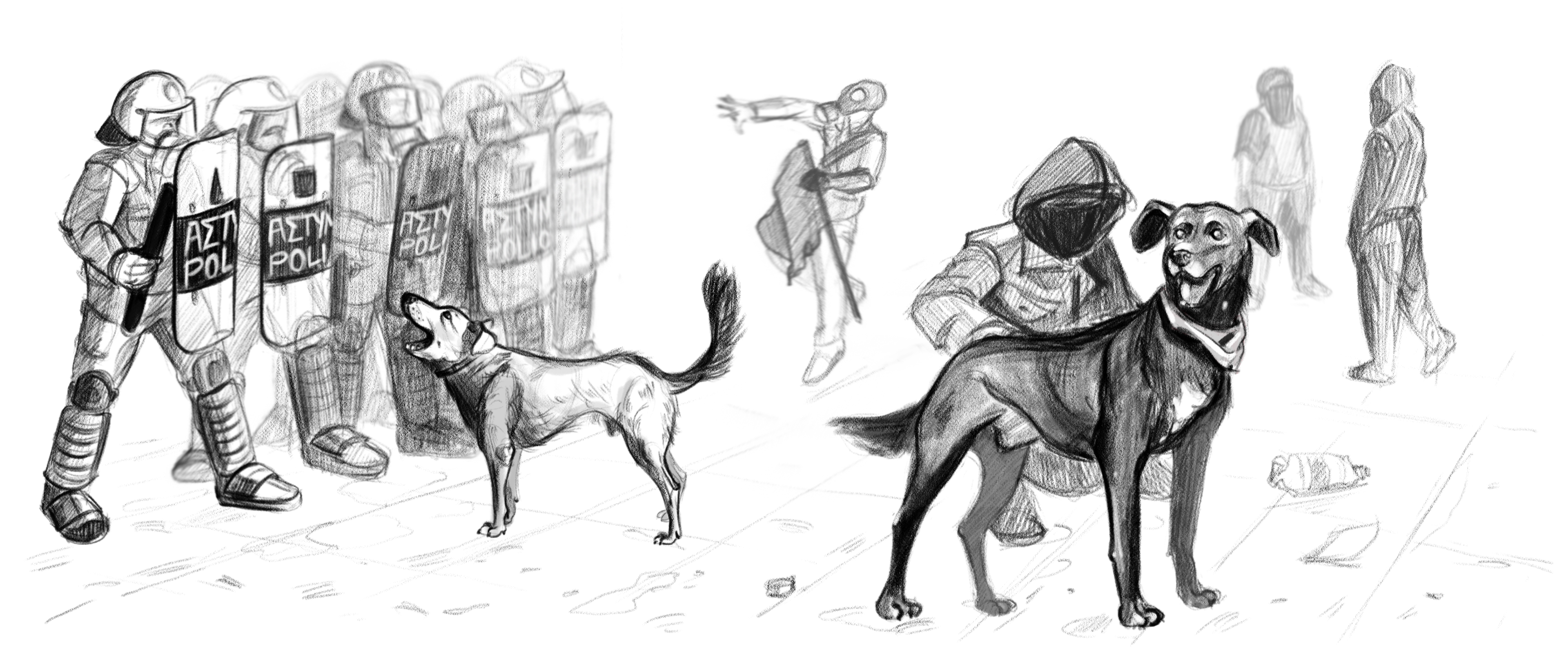
“More than just agents of their own liberation, when it comes to dogs in public spaces, they have even joined various street protests—such as those in Greece and Chile—against austerity measures and police brutality, respectively.”
“Through their loyalty to the protesters and students—always standing by their side and fighting against the state and the police—several stray dogs have become symbols of the movements they have protected.”
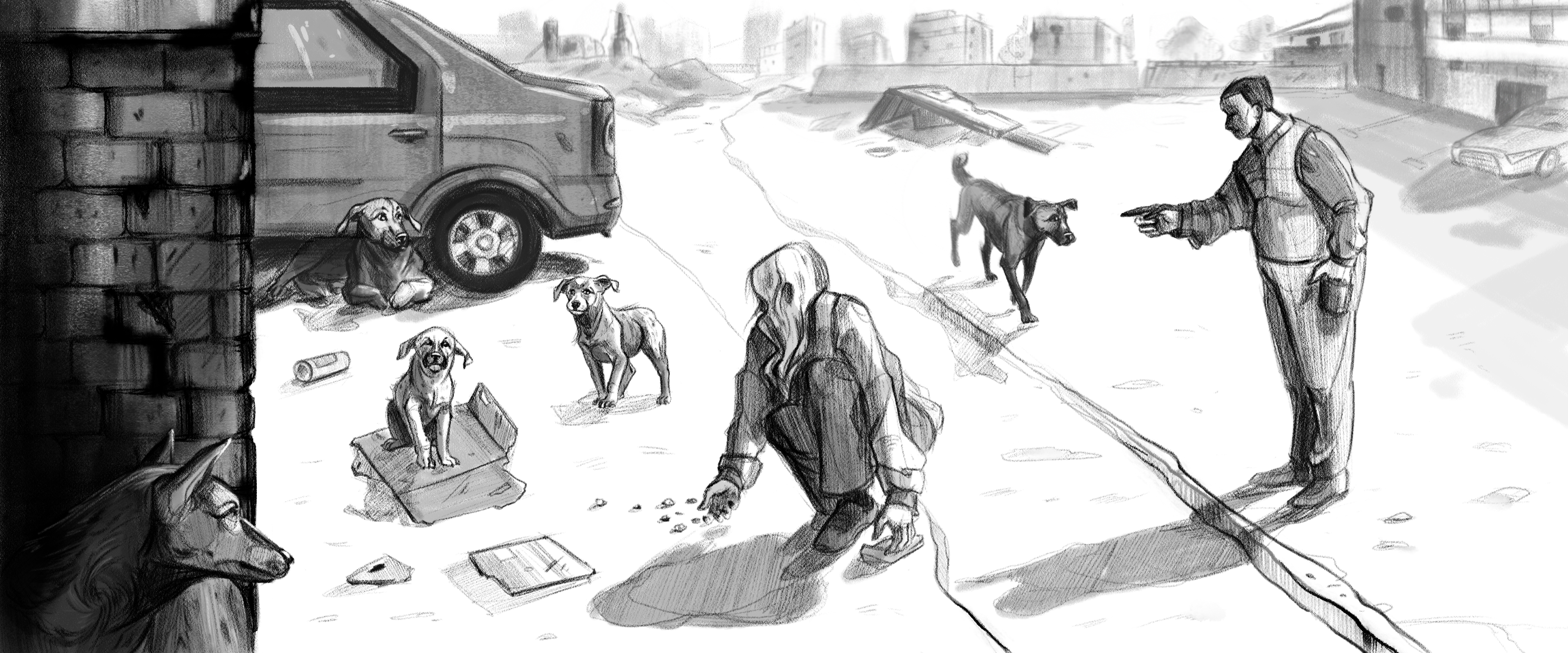
III. The Place of the Synanthropic Dog: Confusing Positions and Common Policies
"To take into account the existence, needs, and interests of those who live outside human dwellings, but not far from us—those beings who are not abandoned ‘pets,’ but who are among us; those animals who resist human structures and interpretations, yet with whom we share common histories, spaces, and identities—is a first step toward thinking about other ways of coexisting in an anthropized world."
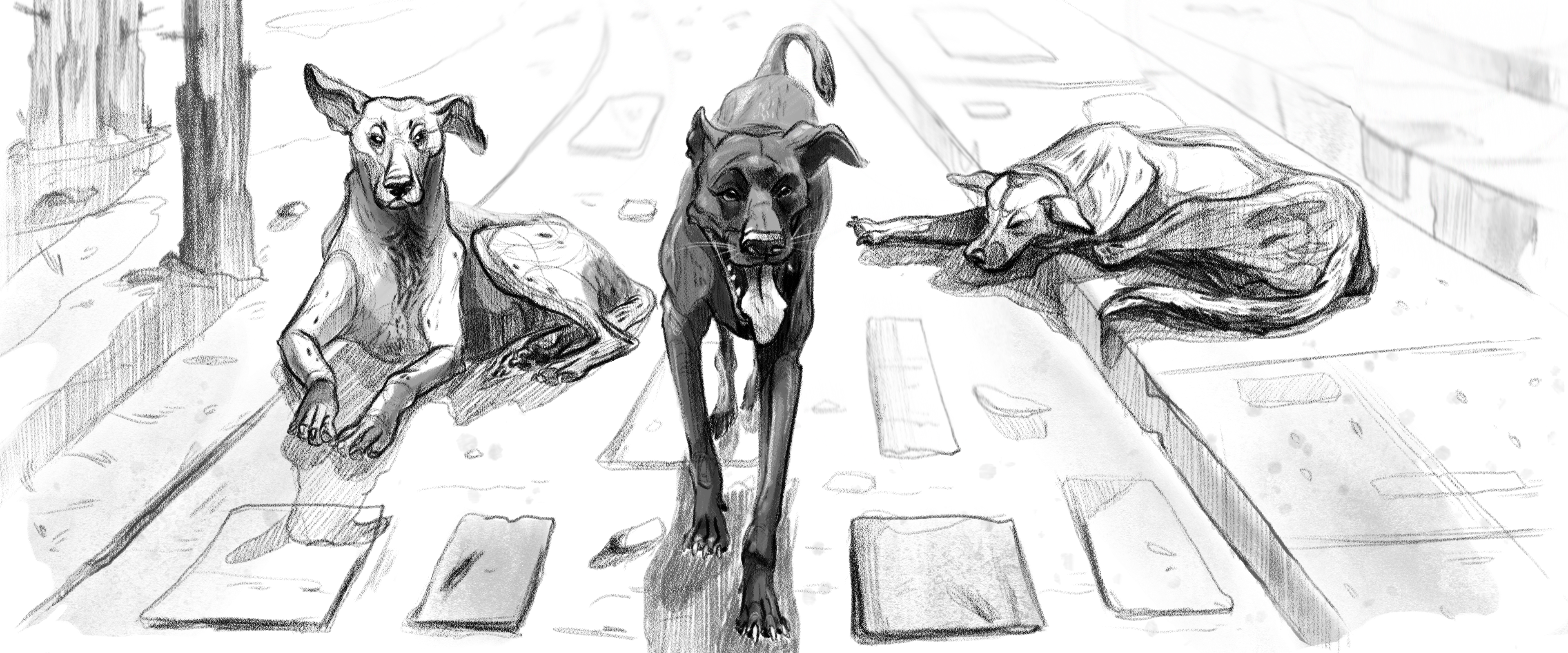





We also created two stickers featuring quotes from the research project to highlight the resilience of dogs in public spaces.